

29/06/2026
How TechCloud ERP Actually Helps You Scale Without the Chaos
View More
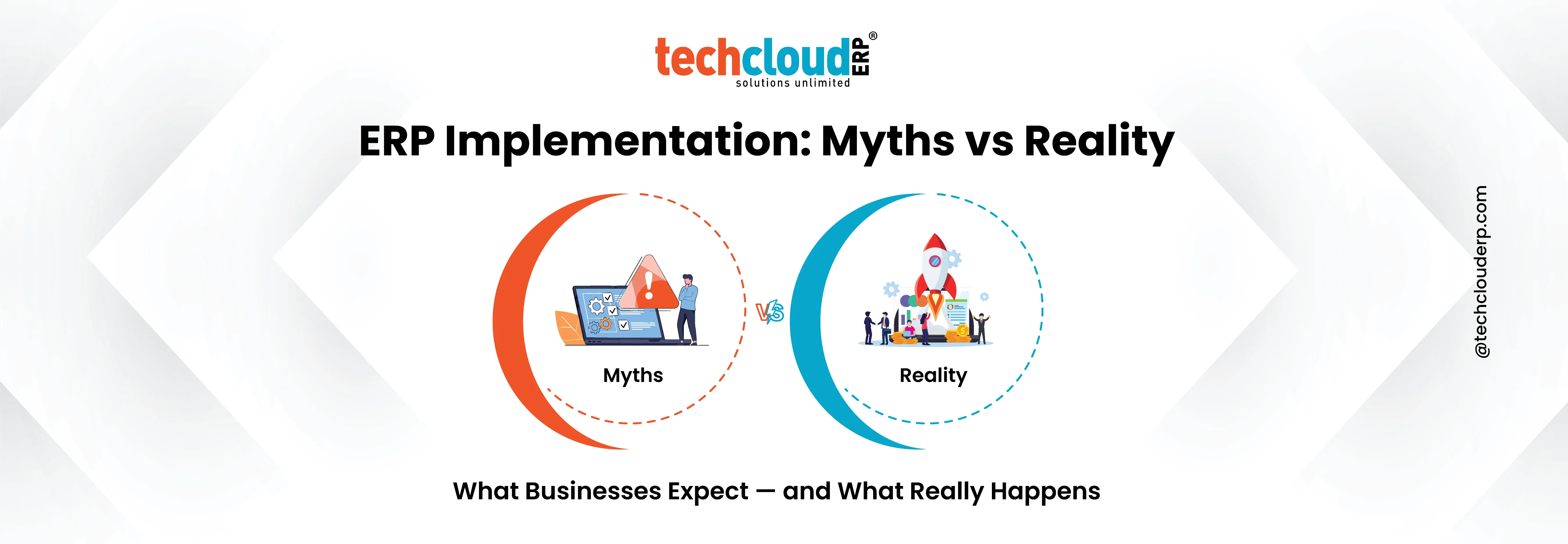
Many businesses see ERP adoption as the next step toward digital transformation. With modern enterprise resource planning software, companies can manage finance, inventory, sales and operations through a single integrated dashboard. This helps improve visibility, coordination and operational control across different departments.
However, many organizations misunderstand what ERP implementation really involves. Instead of being a quick technical upgrade, ERP adoption is a structured process that includes workflow alignment, system configuration, team training and continuous improvement. Understanding this difference helps businesses grow better and achieve stronger long-term results.
When companies start exploring ERP systems, they often come across several assumptions about how quickly the system will work or how easily it can solve operational challenges. These expectations usually come from limited understanding of how ERP projects actually function.
Recognizing erp implementation myths early helps businesses plan more effectively and avoid unnecessary frustration during the project. Organizations that understand the real scope of ERP adoption are better prepared to manage change and improve their operational processes.
Many businesses think ERP simply means installing software and training employees. In reality, ERP affects workflows, reporting structures and operational processes across departments.
Some companies expect immediate improvements after the system goes live. In practice, results improve gradually as teams adopt the system and optimize their processes.
In the past, ERP was associated with big corporations. Today, modern systems support businesses of all sizes, including growing SMEs.
ERP improves visibility and control but does not replace leadership decisions. Businesses still need clear strategies and strong management practices.
A successful ERP project follows a structured approach that focuses on both technology and business processes. Companies evaluating top erp solutions typically start by understanding their operational requirements before selecting the right system.
Once the system is selected, businesses configure modules, migrate data, train employees and gradually transition operations into the system. During this process, organizations start experiencing the practical erp implementation benefits that improve efficiency and transparency.
Businesses identify operational challenges and define goals to ensure the system supports real business needs.
Workflows are mapped and configured in the system so departments can work in a structured and standardized way.
Existing data is cleaned and organized before being migrated to the system to maintain accuracy in reports.
Modern systems support erp automation, allowing businesses to streamline repetitive tasks like reporting, approvals and inventory updates.
ERP implementation is not just about installing a system, it is about improving how businesses will operate. Companies that approach ERP as a long-term strategic investment usually experience stronger operational control and better decision-making.
When businesses understand the difference between myths and reality, they can prepare teams, define processes and manage change more effectively. With the right approach, ERP becomes a powerful tool that supports sustainable growth, improved collaboration and better business visibility.
Many ERP myths come from misunderstandings about how ERP projects work. Businesses sometimes expect quick results without realizing that ERP adoption involves process alignment, data preparation and team training.
Implementation timelines vary depending on business size, operational complexity and system scope. Smaller deployments may take a few months, while larger implementations may take longer to fully optimize.
Businesses often experience improved operational visibility, better reporting accuracy, streamlined workflows and stronger collaboration between departments once the system is fully adopted.

