

29/06/2026
How TechCloud ERP Actually Helps You Scale Without the Chaos
View More
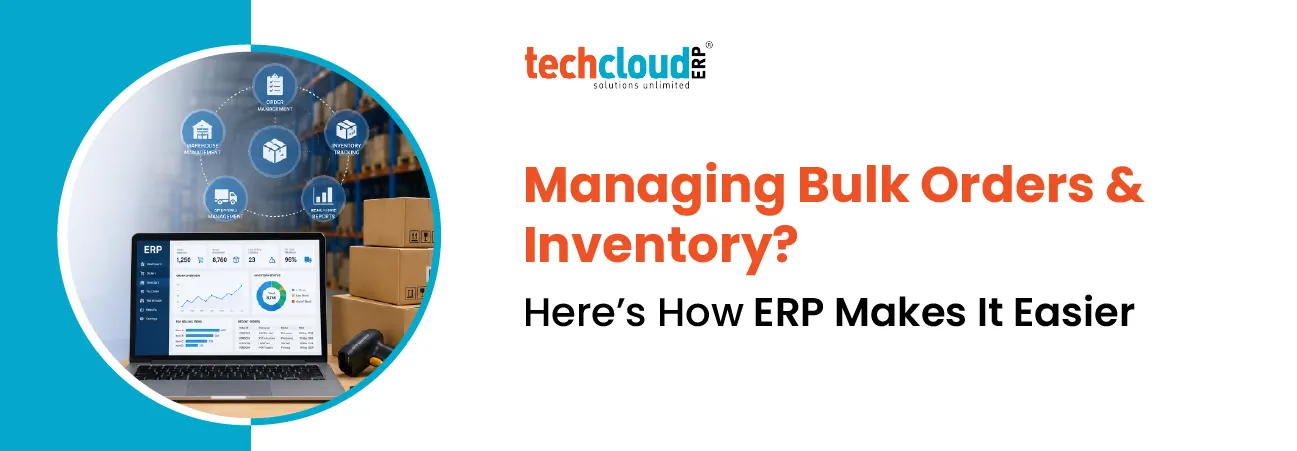
Managing a wholesale business comes with a lot on your plate. From handling bulk orders and tracking stock to coordinating suppliers and meeting delivery timelines, everything needs to move smoothly. Even a small mistake can lead to delays, stock issues, or unhappy customers.
If you are still depending on spreadsheets or separate tools to manage daily tasks, things can become confusing very quickly.
That is where Wholesale ERP Software can make a real difference.
Instead of switching between different systems, ERP helps you manage orders, inventory, purchasing, warehouse activities and customer information from one place. It gives you better visibility, stronger control and fewer manual mistakes.
Let’s face it—managing bulk orders is not always simple.
As a wholesaler, you often deal with large order volumes, multiple buyers, changing stock levels and strict delivery schedules. Without a connected system, keeping track of everything can feel difficult.
With modern Inventory Management Software, your team can see live stock updates instantly. You no longer need to guess inventory levels or keep checking with the warehouse manually.
This means better planning, faster decisions and smoother day-to-day operations.
When this is connected with an Order Management System, things become even easier. Orders can be processed faster, manual work is reduced and mistakes like double-selling or delayed shipments become less common.
Smart Ways ERP Helps Wholesalers Stay in Control
Here’s how ERP supports your daily wholesale operations:
You can track inventory across multiple warehouses in real time. Whether products are incoming, reserved, or already shipped, everything stays visible.
Large customer orders can be approved, managed and allocated quickly without going back and forth between spreadsheets.
ERP can alert you when stock levels drop too low, helping you reorder before products run out.
Supplier details, lead times, purchase costs and order history can stay organized in one place.
Warehouse teams can reduce manual mistakes and improve speed during receiving, counting and dispatching.
Slow-moving stock can be spotted early so you can take action before it affects cash flow.
If your products are stored in different locations, ERP helps manage inventory across all warehouses more easily.
As your wholesale business grows, moving to Cloud ERP Software can be a smart step.
Why does it matter?
Because your business is no longer tied to one office system.
Your sales team, warehouse staff and managers can all access the same live information from anywhere. Whether they are in the office, warehouse, or on-site, everyone stays updated.
This improves communication and reduces delays caused by outdated information.
Modern cloud ERP systems also support key trends like:
Business Automation
Real-Time Analytics
Supply Chain Visibility
Smart Inventory Planning
ERP Integration
Demand Forecasting
Digital Supply Chain Management
These features help wholesalers improve efficiency and make better business decisions.
How often does your team need to double-check stock or order details?
With ERP, everything stays in one connected system.
Inventory, customer details, pricing, purchase orders, invoices and financial records can all be accessed easily without switching between tools.
That means better accuracy and faster work.
Managing custom pricing for different customers can take time when done manually.
ERP helps automate pricing rules, discounts and contract-based rates, so every customer gets accurate pricing without extra manual effort.
Buying too much stock can increase storage costs.
Buying too little can lead to missed sales.
ERP helps you understand past sales patterns, demand trends and seasonal movement so purchasing decisions become smarter and more balanced.
Late deliveries can affect customer trust.
ERP helps improve shipping workflows by connecting order details, tracking updates, dispatching and fulfillment into one process.
This helps orders move faster and reduces unnecessary delays.
Running a wholesale business already comes with enough challenges.
Managing bulk orders, stock, warehouse movement and supplier coordination should not add more pressure.
By moving from manual processes to a centralized ERP system, you can reduce errors, improve visibility, speed up order handling and create a stronger supply chain.
In simple words, ERP helps you stay organized, work smarter and grow with better control.
And for wholesalers, that can make a big difference.
ERP tracks stock movement and sales activity in real time. When inventory falls below a set level, it can trigger alerts or reorder actions automatically.
Yes. ERP can handle customer-specific pricing, discount levels and contract-based rates automatically.
Yes. Modern cloud ERP systems include encryption, secure access, regular updates and automatic backups, which often make them safer than relying only on local systems.

