

29/06/2026
How TechCloud ERP Actually Helps You Scale Without the Chaos
View More
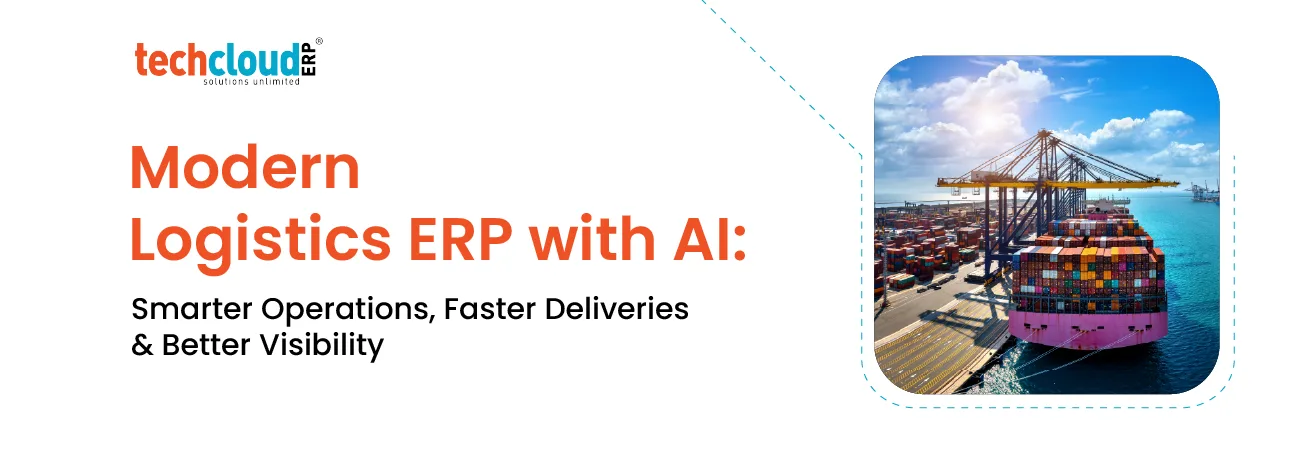
In today’s generation, managing the logistics is not simple. Many businesses deal with delayed deliveries, rising fuel costs and warehouse confusion every day. While working on manual processes, it creates errors, slow communication and operational stress creates for teams.
With AI-Based Logistics Management, businesses can automate tasks, track shipments in real time and improve delivery planning. ERP software for business operations connects transport, inventory and warehouses in one centralized platform. Logistics Management ERP Software reduces manual work, improves visibility and boosts customer satisfaction.
Modern logistics companies manage huge amounts of operational data day to day. Handling transportation, warehouse inventory and delivery schedules manually creates confusion and delays. Then AI-powered ERP systems simplify these processes and improve operational efficiency.
Using an ERP for Logistics Industry helps businesses manage transportation, inventory and warehouse operations from one centralized system. AI technology studies business patterns, predicts delays and helps teams solve issues before they affect deliveries.
Track vehicles, deliveries and shipment updates instantly without manual follow-ups.
AI helps businesses choose faster delivery routes based on traffic and weather conditions.
Using Warehouse & Logistics Management Software, businesses can manage stock movement and warehouse operations more efficiently.
AI systems analyze previous data to predict demand, delays and operational risks early.
ERP systems automatically generate inventory and transportation reports, saving time for teams.
Customers receive faster updates, accurate delivery timelines and better service experiences.
Many logistics companies struggle with disconnected systems and poor communication between departments. Managing transportation, inventory and warehouse activities separately often slows down operations.
The Best ERP Software for Logistics helps businesses connect every operation into one centralized platform. This improves visibility, simplifies workflows and supports better decision-making.
Using an ERP for Transportation Industry, businesses can schedule deliveries, monitor fleets and improve transportation efficiency.
ERP systems help businesses avoid stock shortages and improve inventory visibility across warehouses.
AI-powered dashboards provide live operational data for quicker and smarter decisions.
Businesses can monitor every stage of the supply chain process and improve coordination between teams.
Logistics operations are becoming more complex every day. Businesses need smarter systems to manage transportation, warehouses and deliveries efficiently.
With the right platform, companies can eliminate everyday operational blind spots seamlessly. They cut down on repetitive office chores and protect their bottom line. Instead of managing disconnected systems manually, companies can focus more on growth and operational efficiency with AI.
AI improves route planning, shipment tracking, inventory management and forecasting. It helps businesses make faster decisions using real-time operational data.
Yes. Modern ERP systems support both small and large logistics businesses. They help reduce manual work and improve operational visibility.
Logistics companies use AI-powered ERP systems to improve efficiency, reduce operational costs and manage deliveries more effectively through automation and real-time tracking.

