

29/06/2026
How TechCloud ERP Actually Helps You Scale Without the Chaos
View More
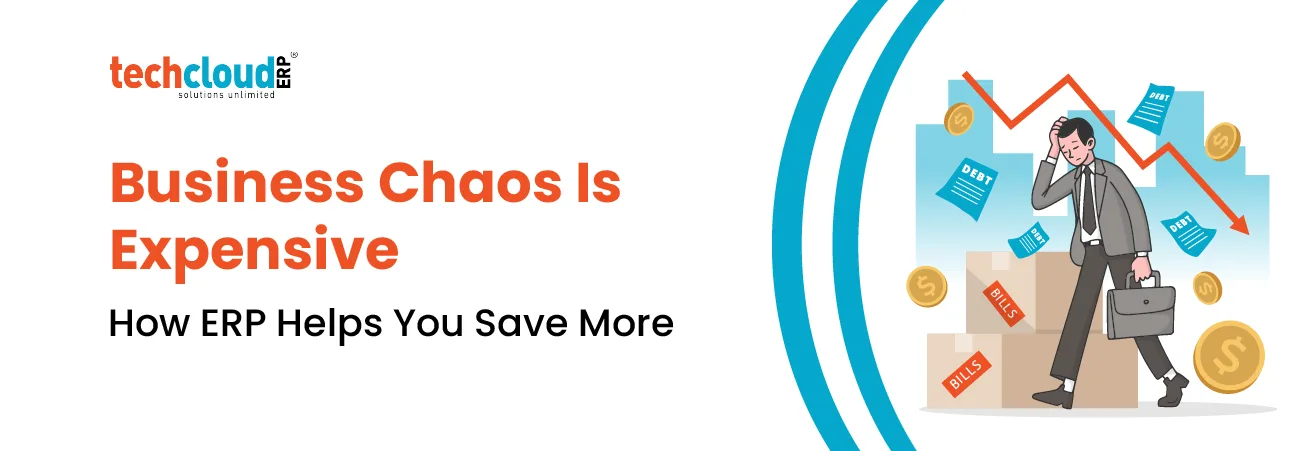
Running a growing business without having one central system can feel manageable in the beginning. A few spreadsheets, messages, follow-ups and manual tracking may seem enough. But as orders increase, customers grow and teams expand, those small gaps slowly turn into bigger problems.
You may start seeing delayed updates, repeated mistakes, missing inventory details, or billing issues. That’s where businesses begin losing money without realizing it. This is exactly why businesses need ERP. A connected system helps bring finance, inventory, sales and operations into one place so teams can work clearly, faster and with fewer mistakes.
Moving to a reliable Business ERP Solution is not just about software—it’s about reducing confusion and creating a stronger foundation for steady business growth.
When daily tasks are handled through separate tools, small errors can quickly become expensive. Missed updates, wrong entries and delayed communication all affect business performance. A smart Cloud ERP Software platform helps reduce these issues by automating routine work and keeping everything connected.
Too much stock can lock up money that could be used elsewhere in the business.
Manual mistakes in orders can lead to wrong deliveries and unhappy customers.
Late invoicing slows down cash flow and affects business stability.
Outdated or incorrect data can lead to poor planning and costly decisions.
When departments don’t stay aligned, productivity slows down.
Without clear business visibility, it becomes harder to react quickly to customer needs.
Growing a business should not mean constantly solving avoidable problems. Real growth happens when leaders can make better decisions with clear and updated information. That is where Cloud ERP for Business Management becomes valuable.
Instead of reacting after problems happen, ERP helps businesses plan ahead, reduce waste and improve financial control.
Track expenses in real time and identify unnecessary spending before it grows.
Set reorder points to maintain stock levels without constant manual follow-up.
Sales teams can quickly access order history, customer details and service updates.
Past sales data helps businesses plan hiring, inventory and future investments with more confidence.
At the end of the day, growing a business should not feel like managing constant chaos.
When operations, finance, inventory and teams all work in separate places, businesses lose time, money and visibility. A connected ERP system gives better clarity, smoother workflows and stronger control over daily operations.
The goal is simple—less confusion, fewer errors, better cash flow and smarter long-term growth.
Many businesses start seeing improvements within the first few months through reduced manual work, fewer errors and better inventory control. Over time, stronger data visibility helps improve profitability and smarter scaling.
Yes. Most modern ERP platforms are designed to be simple and user-friendly. With proper training and gradual onboarding, teams can adapt comfortably.
Yes. Modern cloud systems use strong security, encrypted storage and regular backups to protect important business and customer data.

